

Cybersecurity vs Antivirus: Why Businesses Need More Than Basic Protection
See why antivirus alone cannot protect a business and how layered cybersecurity adds monitoring, access controls, backups and stronger endpoint defense.
Many businesses think cybersecurity and antivirus are the same thing.
They are not.
Antivirus is one layer of protection. Cybersecurity is the broader strategy for protecting users, computers, networks, cloud accounts, email, data, backups, access, and business operations.
That difference matters because modern attacks do not always look like old-fashioned computer viruses.
A business can be attacked through phishing emails, stolen passwords, fake invoices, exposed remote access, weak Wi-Fi, outdated software, unprotected backups, or employee mistakes.
Antivirus can help, but it is not enough by itself.
SMART Solutions helps businesses improve security and cybersecurity with practical protection planning, endpoint security, backups, network review, and user-focused support.
SMART takeaway
Antivirus protects against some threats. Cybersecurity protects the business environment.
Businesses need a layered security strategy that includes endpoint protection, access control, backups, network security, user awareness, and response planning.
Quick answer
Antivirus helps detect and block some malware on individual devices. Cybersecurity is a broader approach that includes endpoint protection, monitoring, access control, backups, email security, network security, user training, policies, and incident response.
Cybersecurity vs antivirus
What is antivirus?
Antivirus software is designed to detect and block known malicious software.
It may scan files, monitor downloads, check suspicious programs, and remove malware from a device.
Antivirus is still useful, but it is only one part of protection.
It may not fully protect against:
- Phishing emails
- Stolen passwords
- Business email compromise
- Unsecured remote access
- Weak cloud account settings
- Poor backup planning
- Ransomware behavior
- Employee mistakes
What is cybersecurity?
Cybersecurity is the process of reducing digital risk across the business.
A cybersecurity plan can include:
- Endpoint protection
- EDR or advanced threat detection
- Multi-factor authentication
- Password policies
- Email security
- Network segmentation
- Firewall configuration
- Backup and recovery planning
- Cloud account security
- User awareness training
- Incident response planning

Cybersecurity looks at how the business actually uses technology every day.
Best for antivirus
Antivirus is best for:
- Basic malware protection
- Device-level scanning
- Blocking known malicious files
- Supporting a larger security strategy
- Businesses that need a minimum endpoint protection layer
Antivirus should be treated as a layer, not the entire plan.
Best for cybersecurity
Cybersecurity is best for:
- Businesses with sensitive customer data
- Healthcare, dental, legal, financial, and professional offices
- Companies using cloud tools
- Teams with remote access
- Businesses worried about ransomware
- Organizations that need backup and recovery planning
- Companies that cannot afford long downtime
Why antivirus alone is not enough
A modern attack may not begin with a virus.
It may begin with a user clicking a link, approving a fake login, using a weak password, opening a malicious attachment, or giving access to the wrong person.
The business may also have risks that antivirus does not address, such as:
- No multi-factor authentication
- Old user accounts still active
- No backup monitoring
- Flat networks with no segmentation
- Unpatched systems
- Exposed remote tools
- No incident response plan
Security reality
Most business risk is bigger than one device.
A single antivirus product cannot replace secure passwords, MFA, backups, user awareness, endpoint monitoring, network security, and recovery planning.
The role of EDR
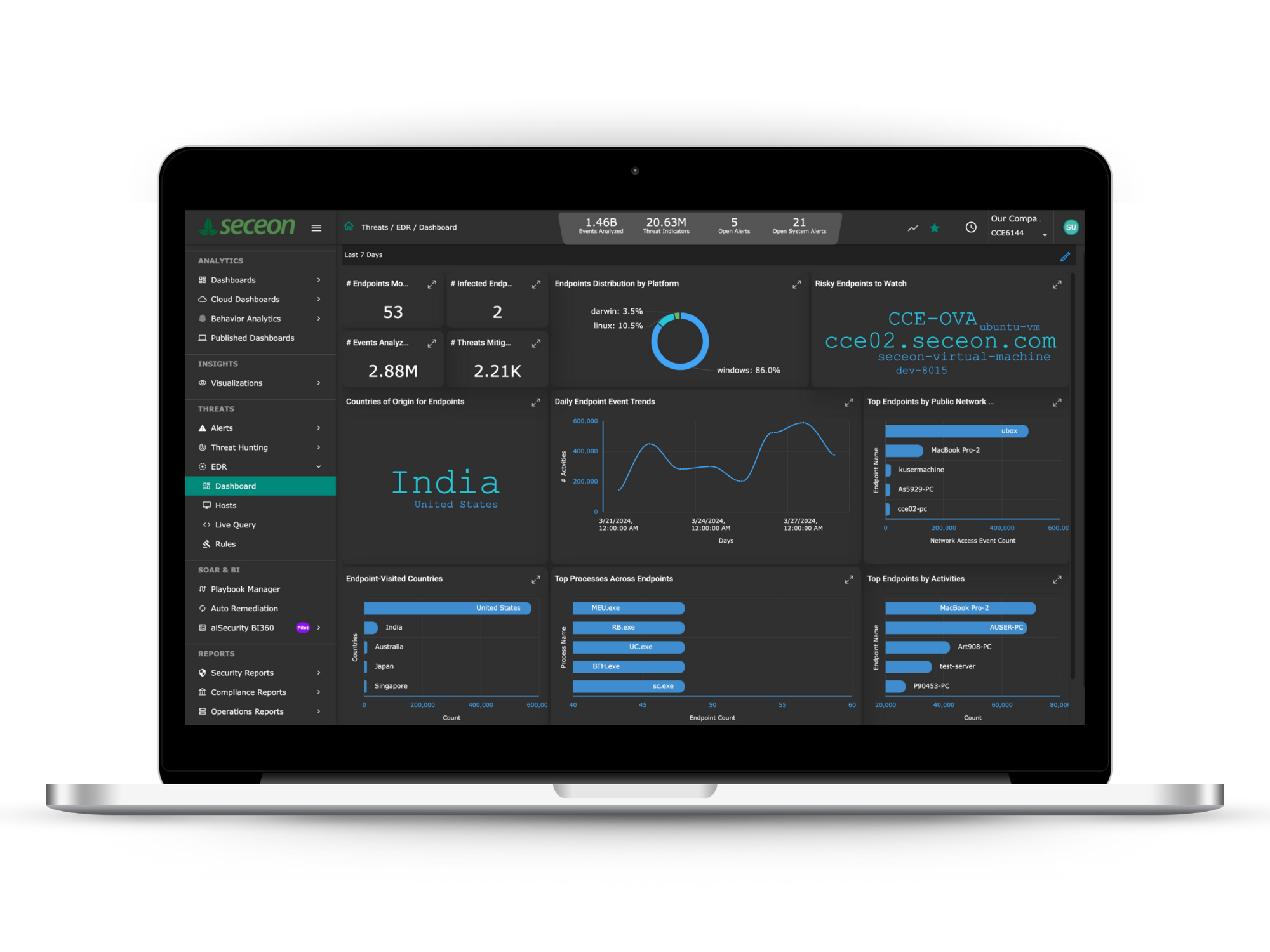
Endpoint Detection and Response, also called EDR, provides stronger visibility than basic antivirus.
EDR can help detect suspicious behavior, investigate activity, and respond to threats more effectively.
For many businesses, EDR is a better fit than relying only on traditional antivirus because it focuses on behavior, not just known malicious files.
Backups are part of cybersecurity
Backups are often discussed separately from cybersecurity, but they are connected.
If ransomware affects your systems, recovery depends on whether your backups are safe, current, and restorable.
That is why SMART Backup should be part of the security conversation.
A cybersecurity plan should include:
- Protect users and endpoints.
- Secure passwords and access.
- Monitor suspicious activity.
- Protect the network.
- Back up critical data.
- Plan how to recover.
Which one should your business choose?
Use antivirus as a basic protection layer.
Choose cybersecurity as the larger strategy.
If your business stores customer information, uses cloud tools, depends on computers, has remote access, uses email, or cannot afford downtime, you need more than basic antivirus.
How SMART Solutions helps
SMART Solutions helps South Florida businesses improve cybersecurity with practical planning and managed technology support.
We can help with:
- Endpoint protection
- EDR planning
- Backup and recovery review
- Network security
- User access review
- Password and MFA guidance
- Remote access security
- Security awareness support
Ready to improve protection?
Move beyond basic antivirus.
SMART Solutions can help your business build a cybersecurity strategy around users, devices, data, backups, networks, and real operational risk.
Contact SMART Solutions to review your current cybersecurity setup.